Ant identification photo
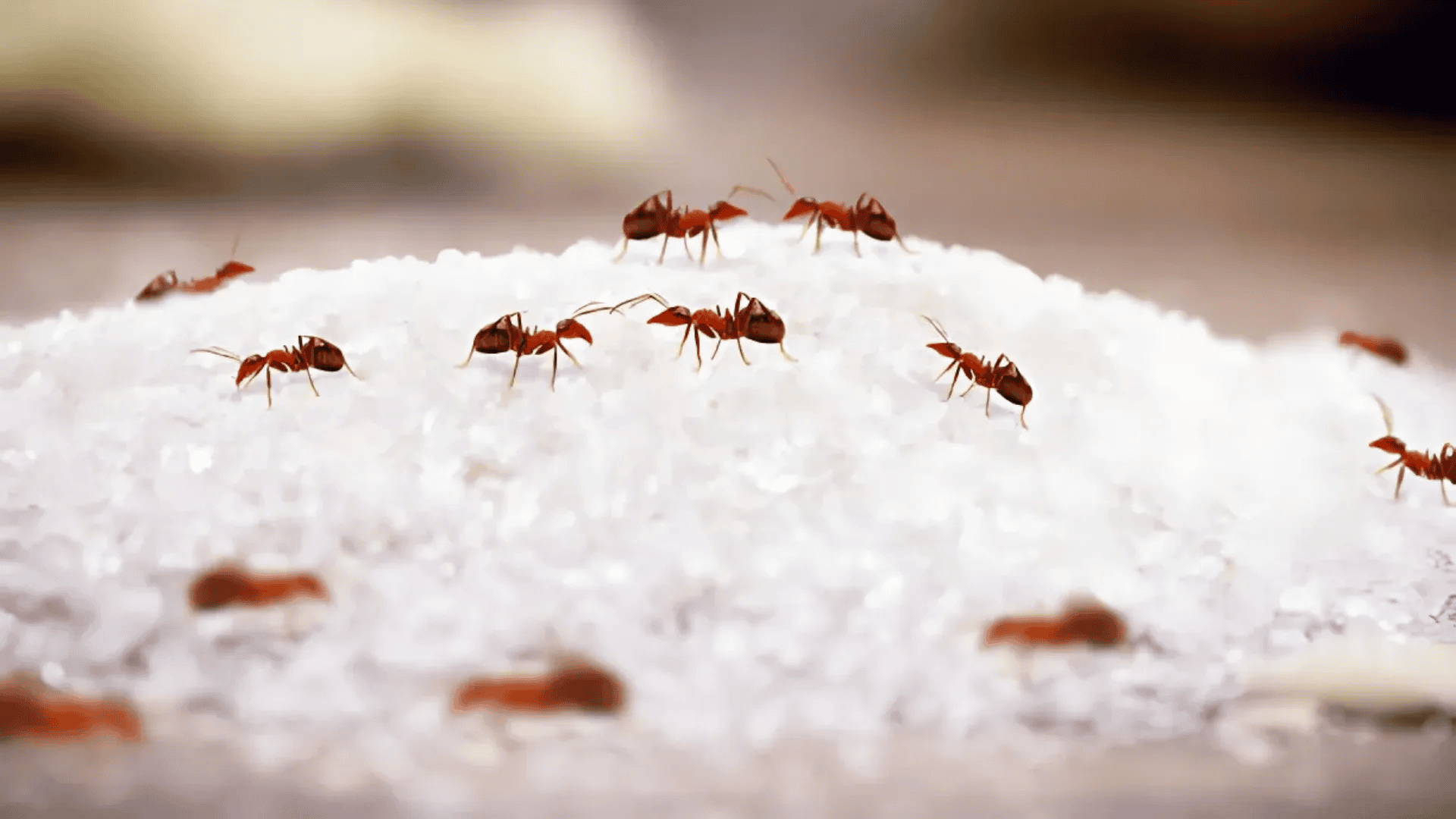
Photos show examples, not every species or life stage. If you are unsure what you found, contact Powell Pest and Lawn for help identifying it.
Ant Facts, Identification & Prevention in Springfield, MO
Ants are one of the most common household pests reported in the Ozarks. Understanding the differences between carpenter ants, sugar ants (odorous house ants), and pavement ants helps you address infestations more effectively with treatments and prevention steps that fit your situation.
Why Ant Knowledge Matters
Carpenter ants can weaken wood, sugar ants can spoil food with scent trails, and pavement ants often move indoors through cracks in concrete. Correct identification guides proper treatment approaches and helps prevent ongoing issues inside and around your home.
Common Household Ants in Southwest Missouri
- Carpenter ants (Camponotus spp.) – Large (¼–½ in.) black or red-and-black ants that hollow wood for nests, leaving sawdust-like frass.
- Sugar ants / Odorous house ants (Tapinoma sessile) – Tiny (¹⁄₁₆–⅛ in.) dark ants that release a rotten-coconut smell when crushed and form multi-queen colonies that can “bud” if disturbed.
- Pavement ants (Tetramorium immigrans) – Small brown ants nesting under sidewalks and slabs; they commonly invade kitchens for greasy or sweet foods and may sting if disturbed.
The Ant Life Cycle
- Egg – Laid by the queen; extremely small and cream-colored.
- Larva – Legless, grub-like; fed by worker ants.
- Pupa – Resting stage (often in a silk cocoon) where transformation occurs.
- Adult – Workers, soldiers, queens, and winged swarmers emerge to expand colonies.
Signs You Have an Ant Problem
- Lines of tiny workers along baseboards or kitchen counters.
- Sawdust-like debris spilling from holes in trim or framing (carpenter ants).
- Rustling sounds inside walls after dark.
- Winged swarmers gathering near windows in spring.
- Coconut-like odor when certain ants are crushed (often associated with sugar ants/odorous house ants).
Practical Prevention Tips
- Seal cracks around windows, doors, and utility lines.
- Store food in airtight containers and clean spills promptly.
- Trim vegetation so branches don’t touch exterior walls or roofs.
- Repair leaks and improve crawl-space ventilation to reduce moisture.
How Powell Pest & Lawn Addresses Ant Problems
- Accurate Identification: Determines the best bait or non-repellent treatment for each species.
- Colony-Focused Baits: Workers share the bait within the colony, including queens, to help reduce ant populations at the source.
- Structural Inspections: Locate potential carpenter ant galleries and contributing moisture issues.
- Follow-Up Visits: Help confirm that activity is declining and that exclusion and treatment measures remain in place.
Need Help With Ants?
Call 417-655-0213 or request service on our Ant Control page.
Frequently Asked Questions
Structure & Home Concerns
Can carpenter ants damage my home?
Carpenter ants don’t eat wood, but they hollow it out to create nesting galleries. Over time, untreated activity can weaken structural timbers and should be evaluated by a professional.
Are sugar ants harmful?
Sugar ants don’t typically bite, but their foraging can contaminate food and surfaces. Because they often form multi-queen colonies and satellite nests, they can be difficult to fully address without a targeted treatment plan.
Identification & Prevention
How do I tell ants from termites?
Ants have elbowed antennae, narrow waists, and forewings longer than hindwings. Termites have straight antennae, thicker waists, and wings that are equal in length.
Why do ants keep returning to my kitchen?
Many ant species leave scent trails. Unless colonies and satellite nests are addressed with the right baits or treatments, new workers will continue to follow existing pheromone trails back inside.
Treatment & Service
How long before bait works?
In many cases, you’ll notice fewer ants within 3–7 days, though it can take longer for larger colonies as the bait is shared throughout the nest.
What should I do with pets during and after treatment?
We recommend keeping pets away from treated areas during the application and until all surfaces are fully dry. Your technician can provide specific guidance based on the type of treatment used.
Talk With a Local Ant Expert
Call: 417-655-0213
Email: cooper@powellpestandlawn.com
Visit: 213 N College Ave, Republic, MO 65738
Explore related pest guides
Compare identification clues and prevention tips for other pests you may find around your property.
Browse the full Pest Library · Explore pest control services · Ask about a pest
Request Your Free Quote
Tell us about your property and the service you need. Prefer to call? 417-655-0213.