Spider identification photo
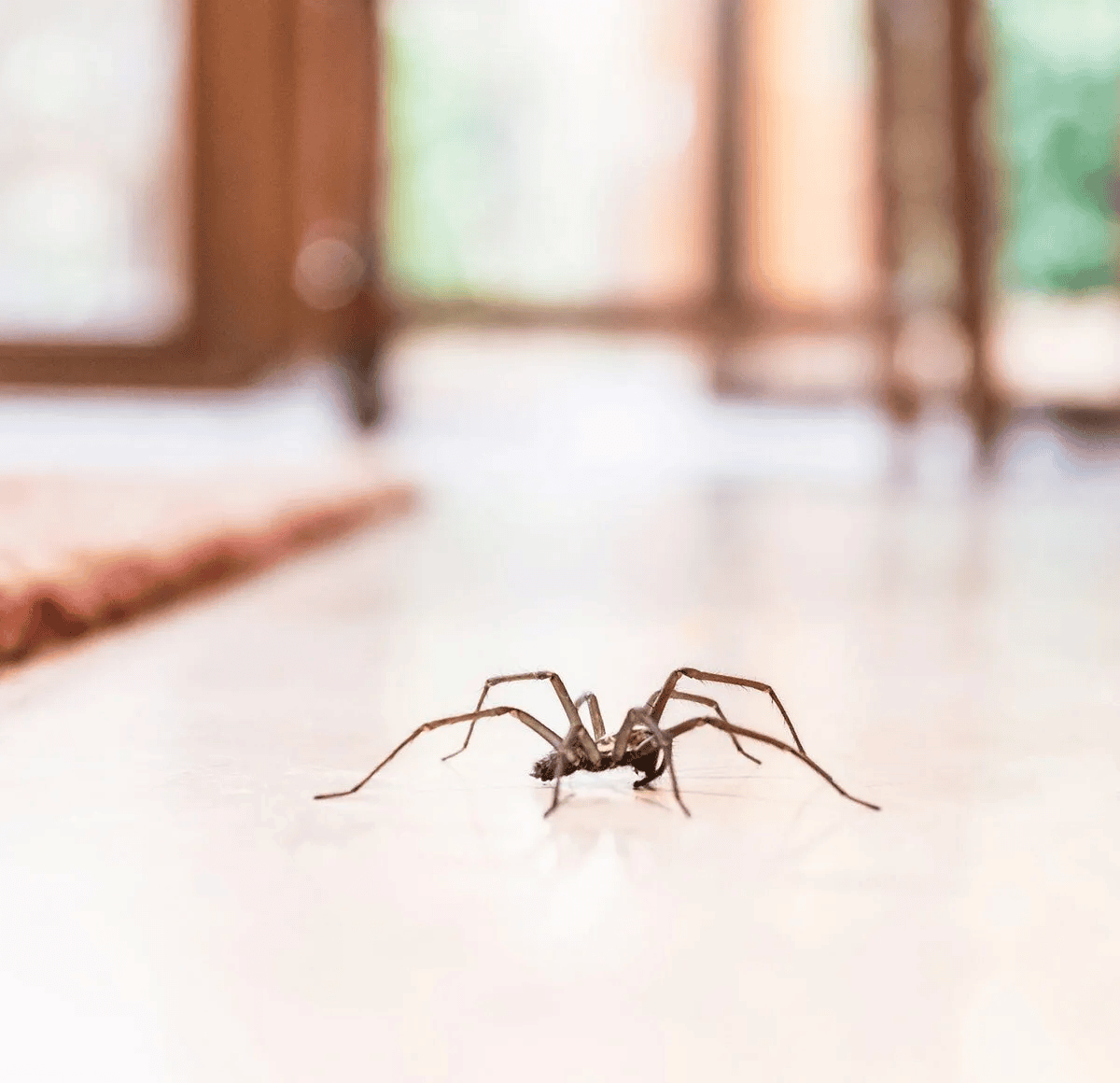
Photos show examples, not every species or life stage. If you are unsure what you found, contact Powell Pest and Lawn for help identifying it.
Spiders of the Ozarks: Identification & Safe Control
From secretive brown recluses to colorful orb-weavers, the Ozark hills are home to more than 300 spider species. Knowing which are harmless—and which may require professional attention—helps protect your family while preserving beneficial predators.
Why Proper ID Matters
Most spiders are allies, feeding on mosquitoes and flies. A few, like the black widow or brown recluse, can deliver bites of medical concern. Correct identification lets us focus on problem species and avoid unnecessary pesticide applications.
Common Ozark Spiders
- Brown recluse (Loxosceles reclusa) – Violin-shaped mark on the cephalothorax; hides in attics, closets, and basements.
- Black widows (Latrodectus spp.) – Shiny black with red hourglass; web in woodpiles, garages, and sheds.
- Wolf spiders – Fast hunters up to 1″; often wander indoors during cooler weather.
- Black-and-yellow garden spider – Large orb-weaver; builds zig-zag webs in late summer.
- Jumping spiders – Compact, curious, and generally harmless; excellent household pest hunters.
Seasonal Activity & Health Risks
Brown-recluse activity is typically highest from May through October. Widow spiders mature in mid-summer, and wolf spiders often move indoors as temperatures drop. Significant reactions to bites are uncommon, but any concerning or unexplained skin lesion should be evaluated by a healthcare professional.
Four Prevention Basics
- Install tight-fitting door sweeps and maintain window screens.
- Store rarely used items in sealed totes; shake out clothing and shoes before wearing.
- Switch porch lights to yellow “bug bulbs” to reduce insect prey around entryways.
- Vacuum wall-floor junctions and undisturbed corners regularly to remove webs and egg sacs.
Powell Pest & Lawn’s Spider Program
- Inspection – Locate harborage sites, webbing areas, and underlying pest activity.
- Targeted Treatments – Apply EPA-registered products in cracks, crevices, and voids according to label directions.
- Sticky Monitors – Use glue boards to track activity and help measure reductions over time.
- Exclusion & Follow-Up – Recommend sealing gaps and schedule follow-up service when ongoing support is needed.
Seeing Spiders?
Same-week inspections are often available.Call: 417-655-0213
Frequently Asked Questions
Are brown-recluse bites common?
No—brown recluses tend to avoid contact and typically bite only when they are trapped against the skin.
Do black widows live in Missouri?
Yes—both northern and southern widows occur in Missouri, but they are more often found in outbuildings and sheltered outdoor areas than inside living spaces.
Are wolf spiders dangerous?
Wolf spiders may bite if handled, but their venom is considered mild. Many homeowners choose to have them removed simply because of their size and speed.
What attracts spiders indoors?
Abundant insect prey, stored clutter, humidity, and small openings around doors, windows, and utility lines can all encourage spiders to move inside.
Talk With a Spider Specialist
Call: 417-655-0213 |
Email: cooper@powellpestandlawn.com
213 N College Ave, Republic, MO 65738
Explore related pest guides
Compare identification clues and prevention tips for other pests you may find around your property.
Browse the full Pest Library · Explore pest control services · Ask about a pest
Request Your Free Quote
Tell us about your property and the service you need. Prefer to call? 417-655-0213.