Stinging-insect identification photos
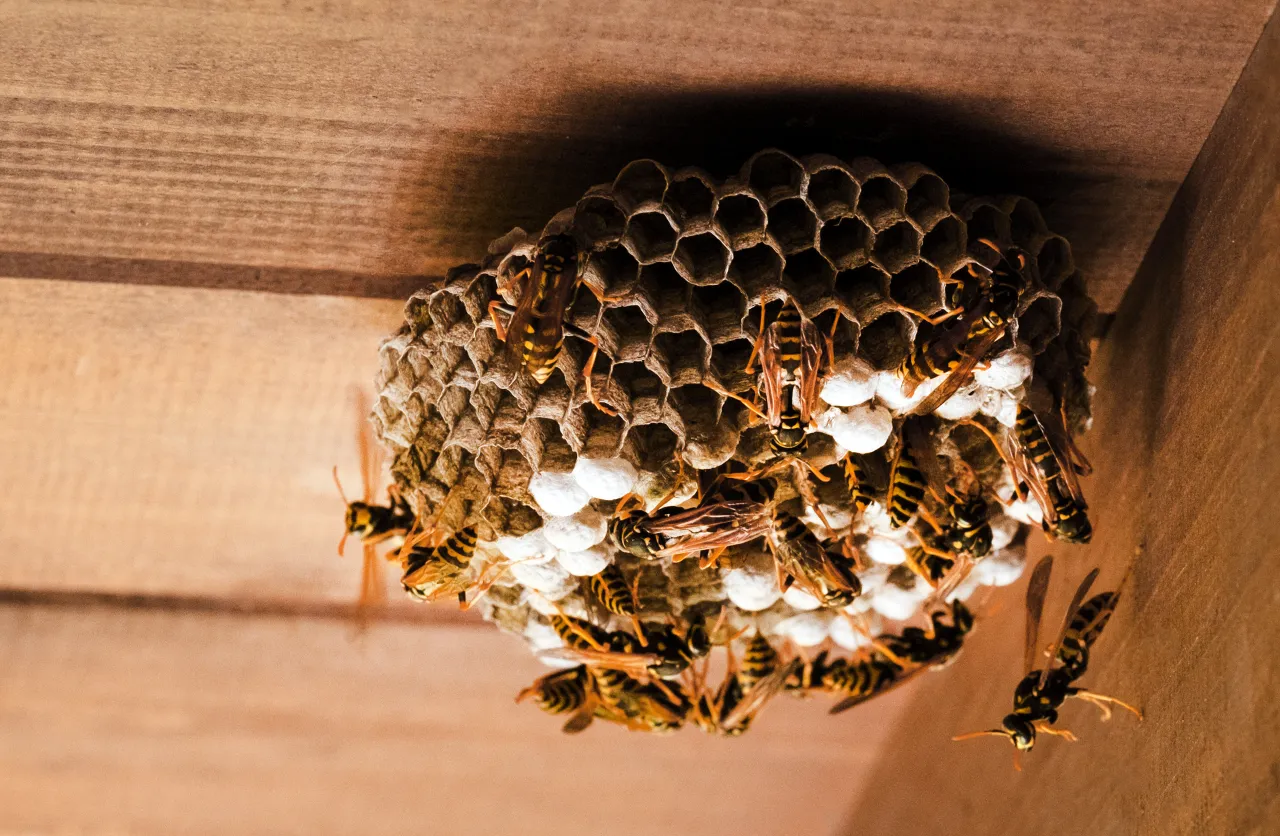
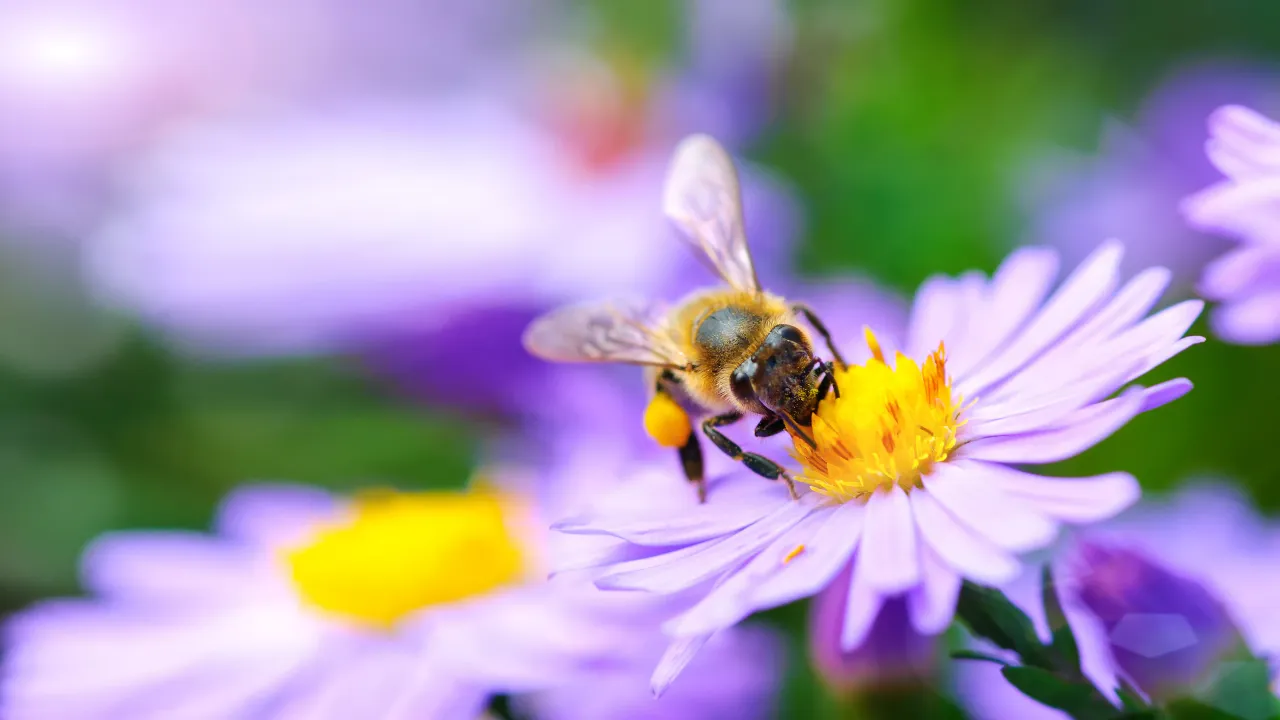
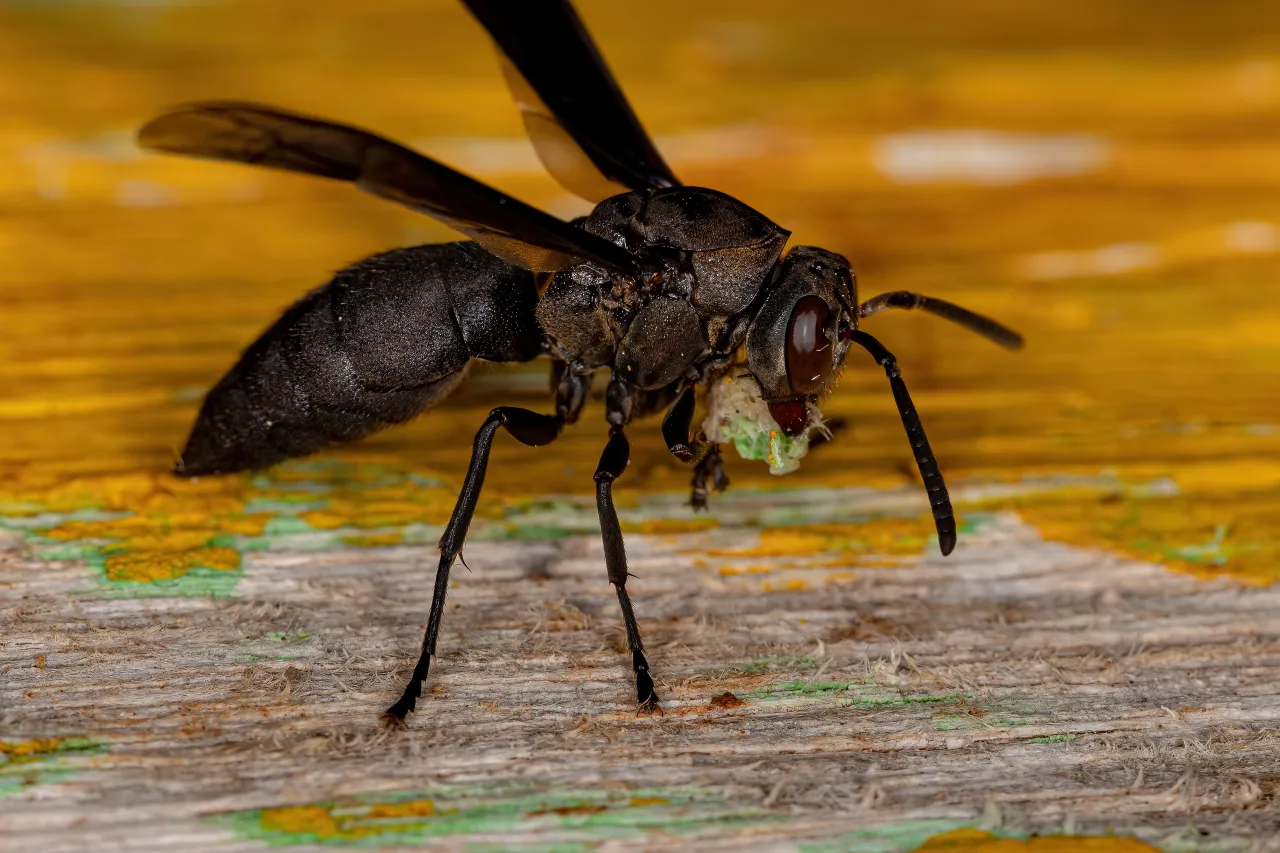
Photos show examples, not every species or life stage. If you are unsure what you found, contact Powell Pest and Lawn for help identifying it.
Wasps, Bees & Hornets: Identification & Control in Springfield, MO
Southwest Missouri is home to a wide range of stinging insects—from gentle mason bees to more defensive yellowjackets. Understanding which species you’re seeing helps protect your family while respecting important pollinators.
Why Identification Matters
Paper wasps are often less defensive unless their nest is disturbed, while yellowjackets can aggressively defend their colonies and sting multiple times. Honey bees are key pollinators but typically sting only once. Knowing what you’re dealing with helps guide the right next steps.
Common Stinging Insects Around Your Home
- Paper wasps (Polistes spp.) – Build open, umbrella-shaped nests under eaves and overhangs.
- Yellowjackets (Vespula spp.) – Nest in the ground or wall voids; frequently involved in late-summer sting incidents.
- Bald-faced hornet (Dolichovespula maculata) – Creates enclosed paper nests in trees or on structures and may respond strongly to disturbances.
- Mud daubers – Solitary wasps that construct mud tubes; they rarely sting.
- Honey bees (Apis mellifera) – Social pollinators that may form temporary swarms on branches, fences, or structures.
- Bumble bees (Bombus spp.) – Usually nest in the ground or cavities and are generally non-aggressive when left undisturbed.
- Carpenter bees (Xylocopa spp.) – Tunnel into bare or weathered wood; males often hover near people but cannot sting.
Seasonal Activity & Health Considerations
Most social wasp and hornet colonies grow throughout the summer and reach peak size in late summer or early fall. After hard frosts, many workers die off and only newly mated queens overwinter. Any suspected allergic reaction to a sting should be treated as a medical emergency and evaluated by a healthcare professional.
Four Prevention Basics
- Keep outdoor trash containers closed and clean to reduce attractants.
- Install or repair screens on attic vents and soffits to limit nesting sites.
- Inspect eaves and overhangs in early spring and address small nests promptly.
- Plant nectar-rich flowers a bit farther from high-traffic patios or play areas.
How Powell Pest & Lawn Helps With Stinging Insects
- Bee Swarm Relocation: When conditions allow, we coordinate with beekeepers to re-hive honey-bee swarms instead of treating them like typical pests.
- Nest-Targeted Treatments: For wasps and hornets, we apply products directly to nests according to label guidelines to help reduce activity.
- Exclusion Recommendations: We identify and suggest ways to seal gaps, cracks, and openings where future nests could be started.
- Seasonal Inspections: During the warmer months, we can inspect key areas and point out early nest activity before populations build.
Concerned About a Nest or Swarm?
Call 417-655-0213 or request an online quote to talk through your situation with a stinging-insect specialist.
Frequently Asked Questions
What’s the safest time to address a wasp nest?
Many nests are less active in the late evening or very early morning when temperatures are cooler and most wasps are inside. Your technician will choose timing and methods based on label directions and site conditions.
Will honey bees reuse a wall void if not removed?
Old comb and residual odors can attract future swarms. After bees are relocated, sealing or addressing the void helps reduce the chance of new colonies choosing the same spot.
Can carpenter bees damage structural wood?
Over time, repeated tunneling in fascia, trim, or other exposed wood can contribute to cosmetic and, in some cases, structural concerns. Filling existing galleries and finishing exposed wood surfaces can help discourage future activity.
Do yellowjacket traps take care of the entire colony?
Traps can reduce the number of foraging yellowjackets but typically don’t affect queens or developing brood inside nests. Addressing the nest itself is usually needed for more complete colony control.
Talk With a Stinging-Insect Specialist
Call: 417-655-0213
Email: cooper@powellpestandlawn.com
Visit: 213 N College Ave, Republic, MO 65738
Explore related pest guides
Compare identification clues and prevention tips for other pests you may find around your property.
Browse the full Pest Library · Explore pest control services · Ask about a pest
Request Your Free Quote
Tell us about your property and the service you need. Prefer to call? 417-655-0213.